Glowworms and Hobbiton
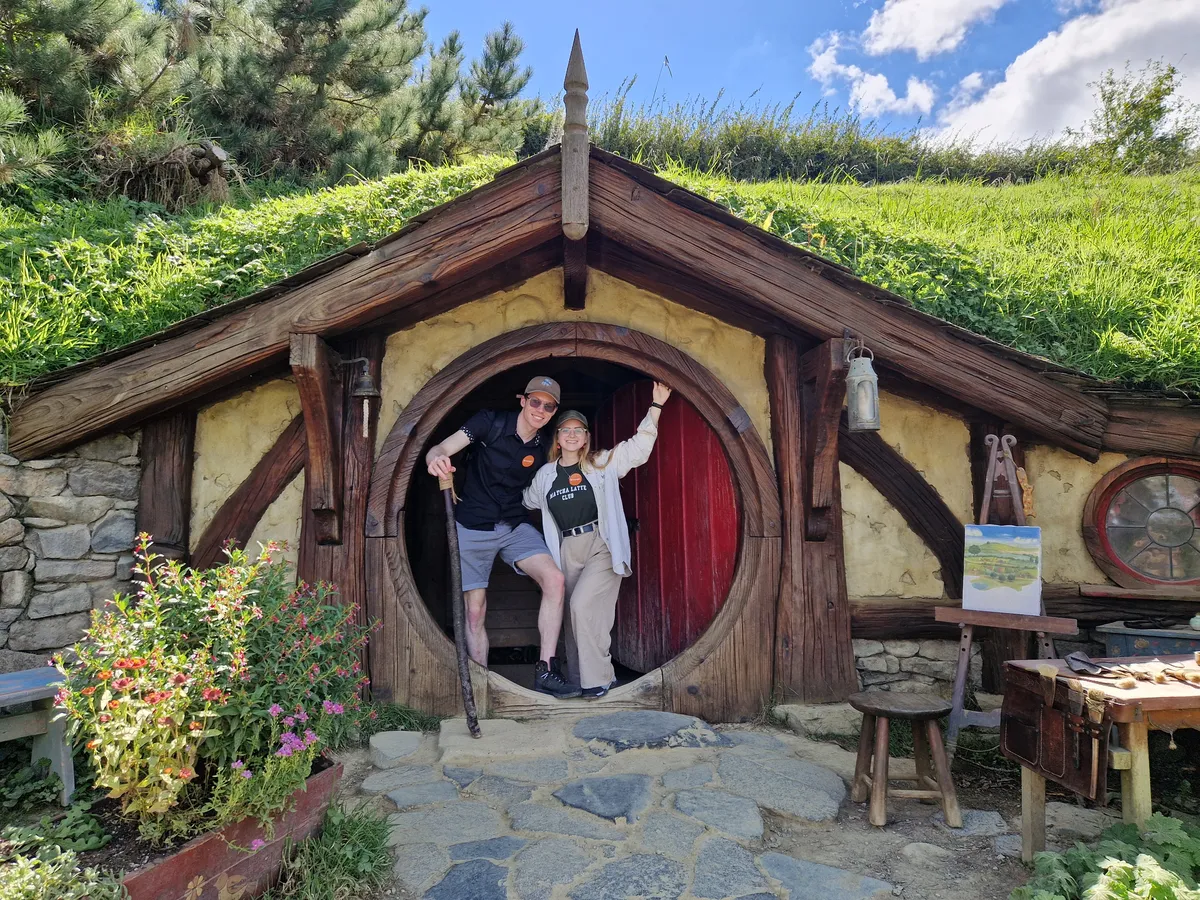
Glowworms
✒️ Written by: Abbie
There aren't many occasions we would willingly wake up at 6am for, but going on a day trip to the Waitomo Glowworm Caves and Hobbiton is one of them. We checked out of our Auckland hotel room at 7am and pushed our suitcases up the hill to the Sky Tower bus stop. Abbie was relieved to be asked if the provided lunch should be meat or veggie, and the bus driver also assured us we don't need to worry at all about making sure our luggage ends up on the Rotorua bus (not back to Auckland) at the end of the day. And so, we settled into our seats and listened to our bus driver David provide us with both useful and useless facts as he drove us out of the city towards our first stop - Waitomo Glowworm Caves.
It was mid-morning by the time we arrived at Waitomo, and we hopped off the bus into the sunshine... but not for long. We were lined up, photographed in front of a green screen, and sent down beneath the ground in no time. Our tour guide gave us a briefing which, in summary, meant DO NOT TOUCH the limestone cave walls down there. They even had a get-it-out-of-your-system rock at the entrance to the caves which we could touch to our heart's content, to quite literally get the urge out of our systems. This is because the Waitomo Glowworm Caves were formed around 30 million years ago under the sea, and contain layers upon layers of limestone with fossilised marine creatures inside. It is a fragile place, with stalagmites and stalactites decorating the floors and ceilings.
It was incredible inside the caves, although sadly photos were prohibited. We walked deeper into the heart through a sizeable tunnel, which opened out into various chambers. There was so much space inside, the chambers being tall and wide. Our tour guide was brilliant and humorous, pointing out different rock formations in the shapes of creatures such as kiwis and elephants, and providing us with history about the caves.
Local Maori have known about the Waitomo Glowworm Caves for a long time, but no one ventured in until the late 1880s. The first people to go inside used a raft and candlelight to enter via the stream which now hosts boat after boat of glowworm sightings. Gliding in on the raft, the explorers were amazed to see glowworms twinkling away on the cave's ceiling. As they rummaged further and found dry land, they discovered the cave's tunnels and chambers, awaiting tourists. We learned all this and more as we weaved our way through the dry parts of the tunnel, getting ever-closer to the underground channel and glowworms.
The cave's cathedral is nestled away at the bottom of the tunnels, and boasts the ability to not echo sounds around the walls. Naturally, this meant we all stood and sang happy birthday to someone who happened to be celebrating his 30th. Apparently, over the years there has also been a significant amount of concerts performed in the chamber due to these impressive acoustics.
Once we'd seen the cathedral chamber and all the winding tunnels leading to it, it was officially glowworm time. We were all told to be quiet, as we made our way to the water deep inside the cave. We lined up and, one by one, seated ourselves in two simple boats which awaited us. We squeezed in like sardines, and our tour guides stood at the bow and reached up to a network of ropes along the ceiling. They pulled at these ropes to power the boats through the stream and steer us round corners.
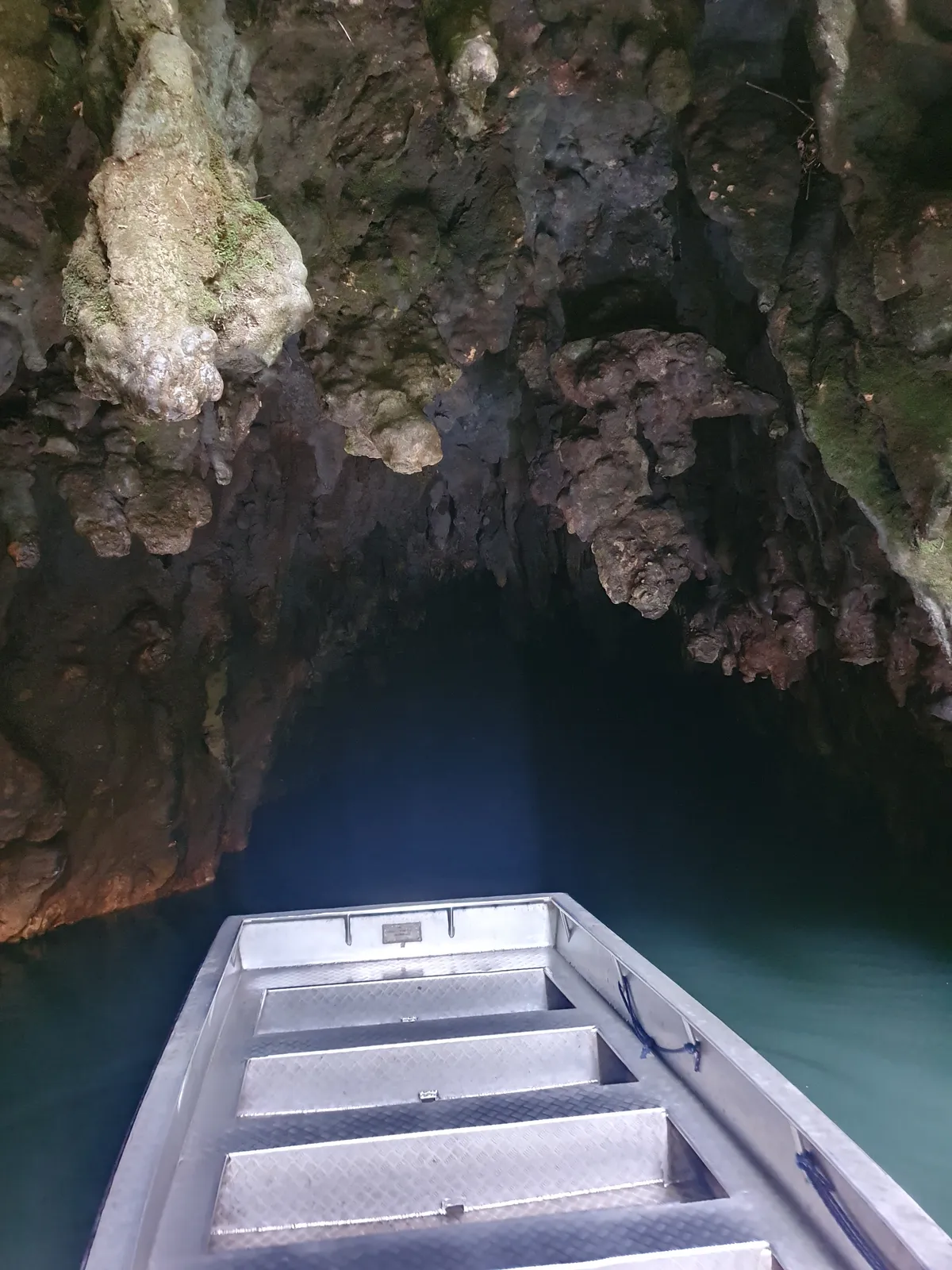
It didn't take long once we sat inside the boat and looked up to the roof of the cave that we noticed the glowworms. They were in their thousands. Once our eyes adjusted to the new, extreme level of darkness with all guiding lights turned out, the glowworms sparkled and shimmered above us. They looked like stars in a night sky. Thousands of tiny, bright blue dots suspended on the rocks.
Other guests in our boat kept talking, driving us crazy, so we were relieved when the tour guide told us to shush. Everyone broke into silence, gazing at the cave's ceiling instead and taking in the wondrous speckles of light. The guide pulled us along the ropes through the stream and into a chamber where we stopped and stared upwards for a few minutes.
The glowworms' real name is actually Arachnocampa Luminosa, and they are fungus gnats who produce silky worm-like structures during their laval stage to entrap prey (mainly other gnats and flies). These silk strings glow, attracting flies who are lost inside the cave and trying to find the exit.
We spent a total of 10-15 minutes on the water looking up at the glowworms above us. It was an incredible experience, and towards the cave's exit we were allowed to take photos. We managed to capture the photo below, although it doesn't quite do the glowworms justice.

The boats made their way out of the cave on the stream which once led the first explorers inside. We crept back onto land, feeling amazed at what we'd just witnessed. Back in daylight, a humid and tropical-looking forest surrounded the cave's entrance. We had a quick look in the gift shop before heading back to the bus and receiving our provided lunch.
Next stop: Hobbiton!
Hobbiton
✒️ Written by: James
Of course no visit to New Zealand is complete without a trip to the Hobbiton movie set. Construction began in 1999 to turn part of an unassuming sheep farm in Matamata into a film set worthy of the upcoming Lord of the Rings trilogy. It was a monumentous effort1. They even let the weeds grow out to make it feel more congruous and natural before the cameras started rolling. From Wikipedia:
After filming, the production crew returned to the site and pulled down much of the Hobbiton set. Many of the Hobbit Holes were filled with soil and covered over. However, because of heavy rain, 18 of the 37 Hobbit Holes were left untouched, with plans for the film crew to return after the rains and destroy all of them. The Alexander Family then made a deal with the Production company to save the remainder of the Hobbiton and to allow for organised visits for the public.
When they started filming The Hobbit, the set was built up to be more permanent. It has since been gradually and lovingly improved and curated to this day.
We arrived on the farm at the hub - a converted wool shed that now acts as a café, gift shop, ticketing office, and car park.2
From there, you get driven down to Hobbiton on a road that was actually built by the NZ army. Apparently Peter Jackson wrote to the Prime Minister for help after realising that hundreds of cast and crew and all that film equipment would need to be transported to and from the rural farm hills on a daily basis. I suppose there wasn't a whole lot of warring to be doing instead.
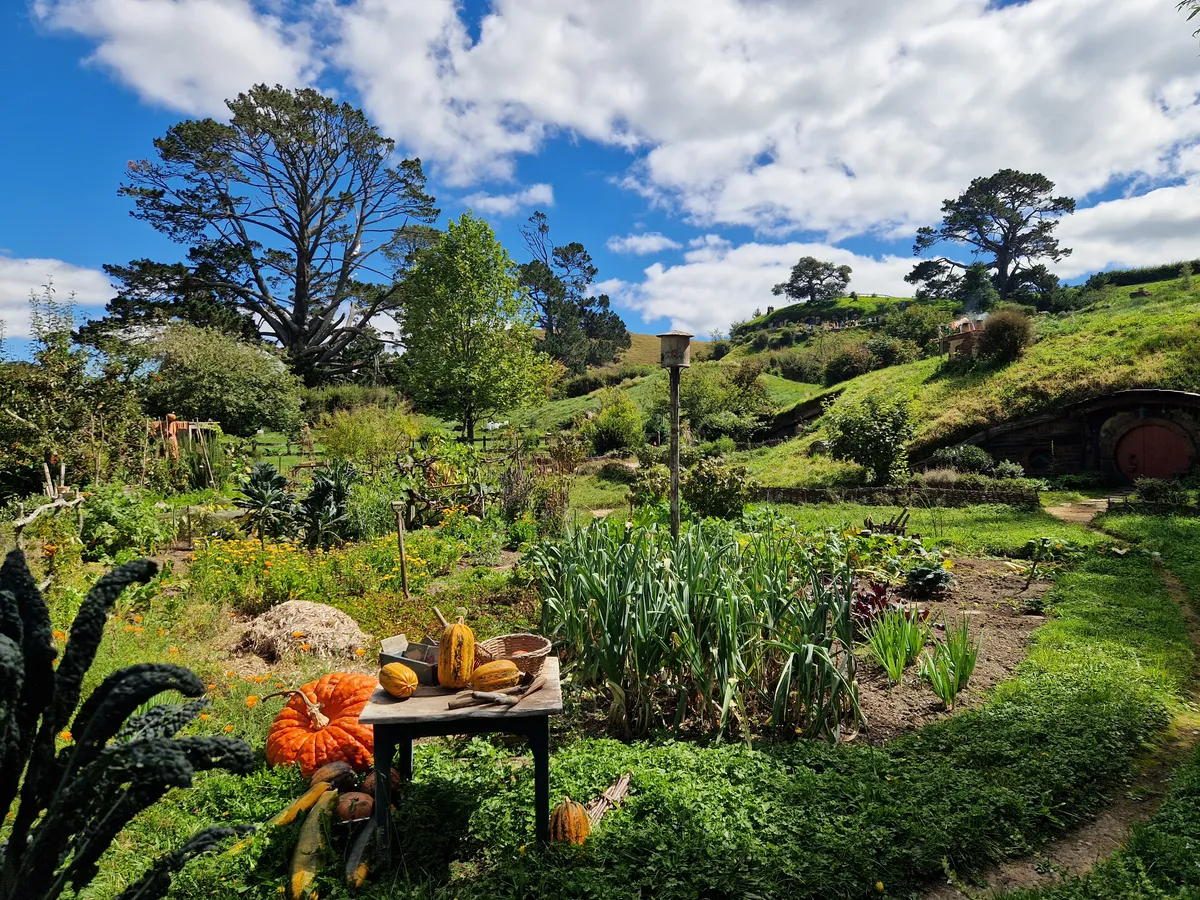
We hopped out of our shuttle at an unsuspecting car park and began our walking tour (we were led by an ex-teacher-stroke-Tolkien-nerd) at a bucolic-looking sign post pointing to "Hobbiton". We were then led through a cut in the hill to the set. Specifically this exact location:

It was a beautifully hot day and there were loads and loads of butterflies flapping around. It honestly did feel very fantastical.
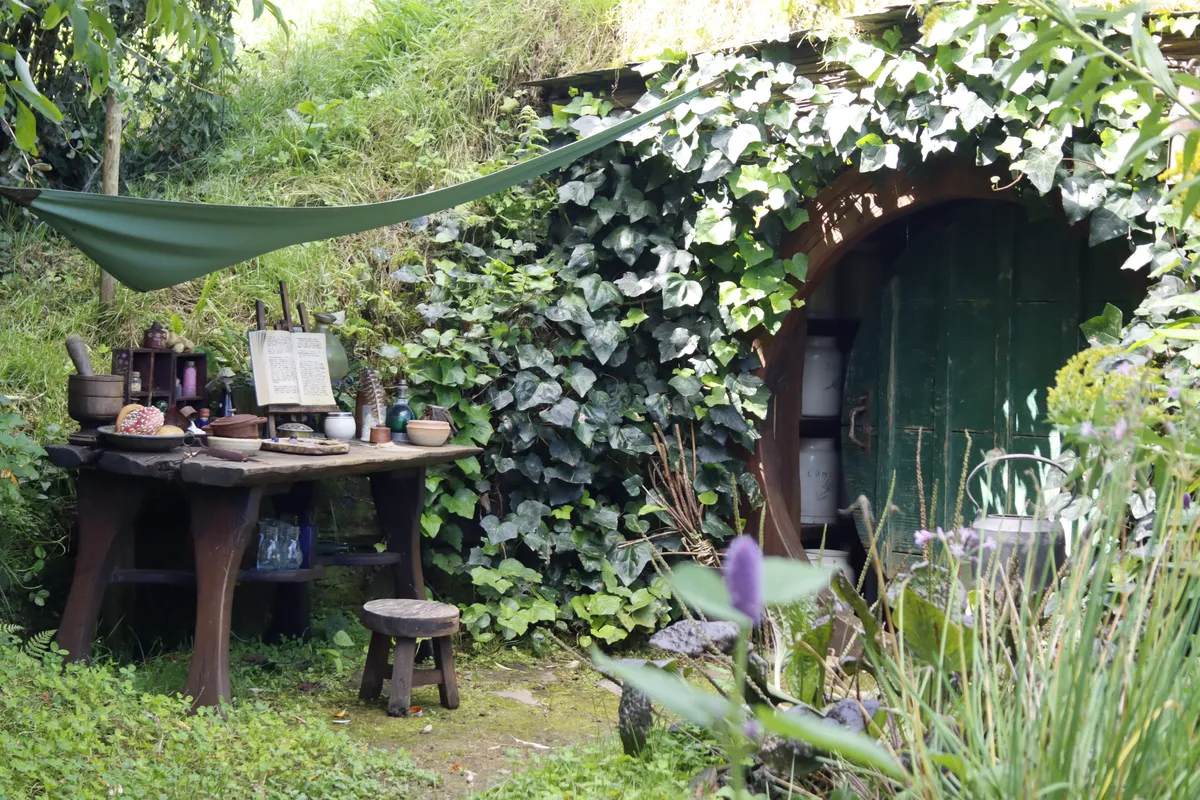
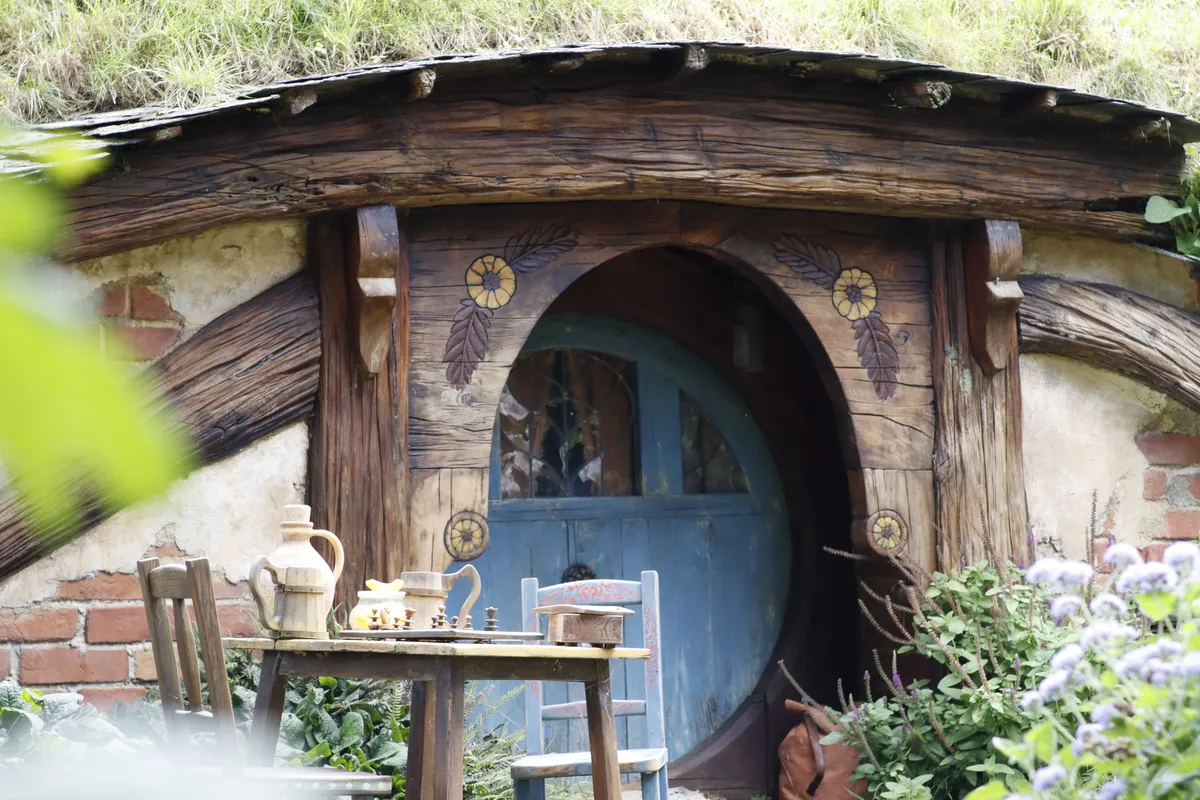
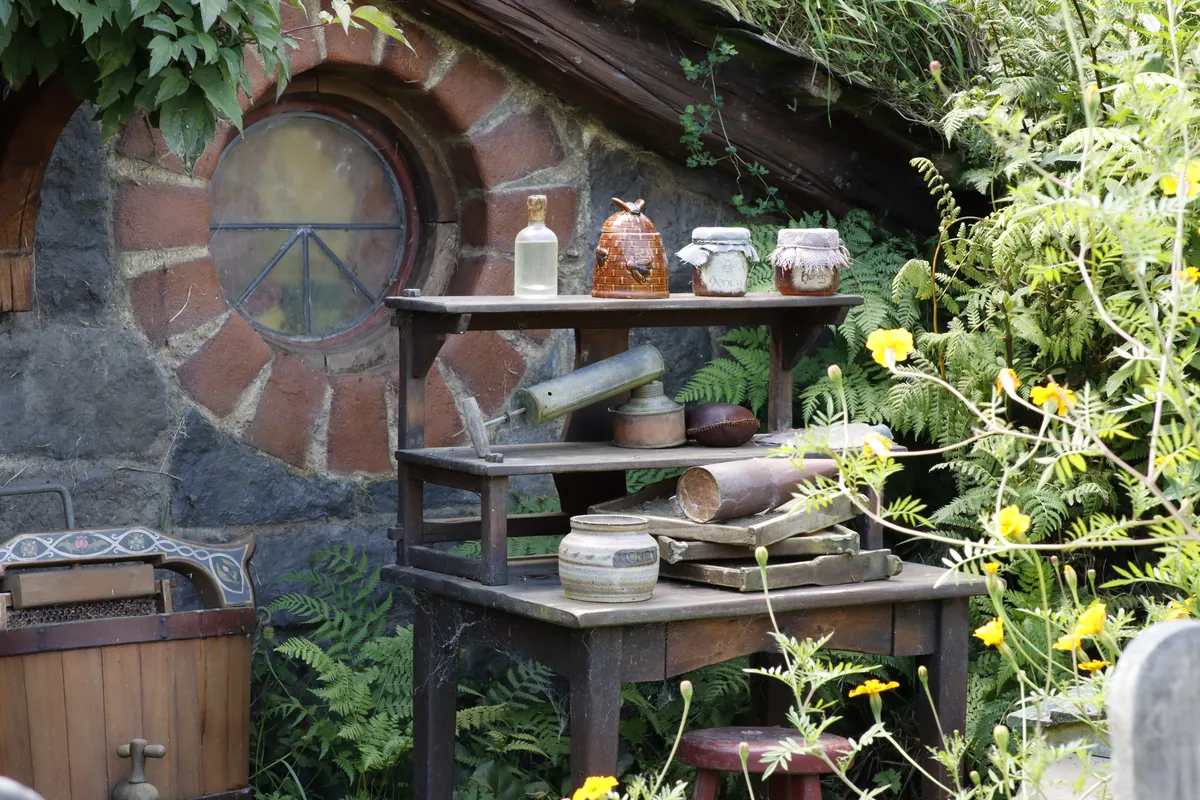
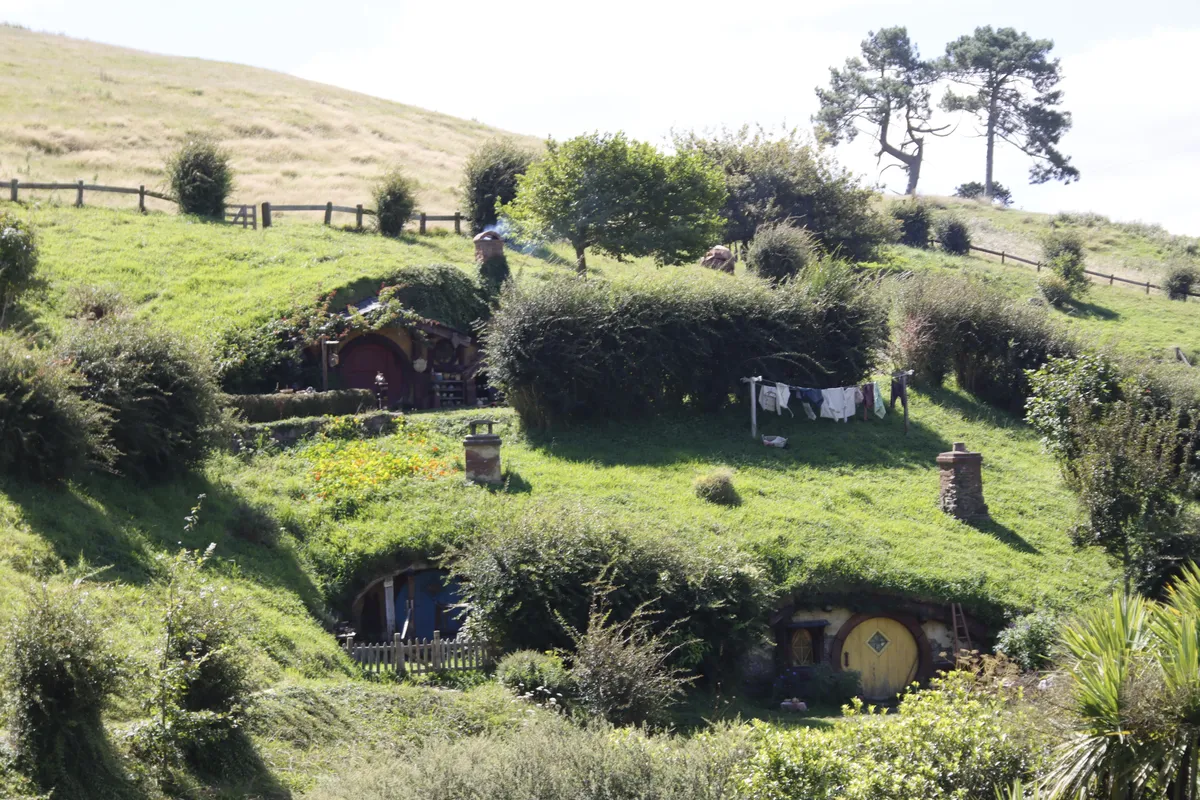
Each hole door is painted a different colour depending on its scale (e.g. blue for 1:1 human scale, green for 1:2 scale, etc.). Furthermore, each hole has its own theme which corresponds to the job of its owner. The beekeeper's hole (under a hill of beehives) boasts jars of honey, plenty of planted flowers, and bee motifs painted on the letterbox.
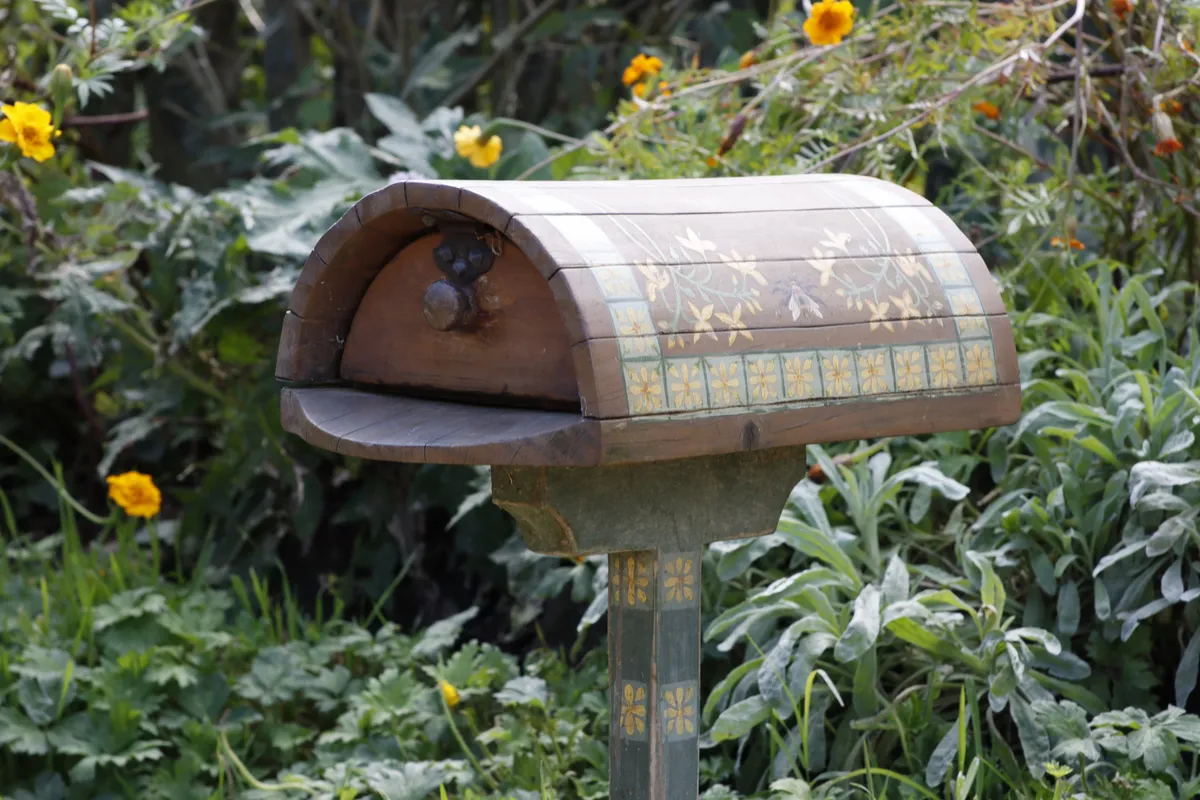
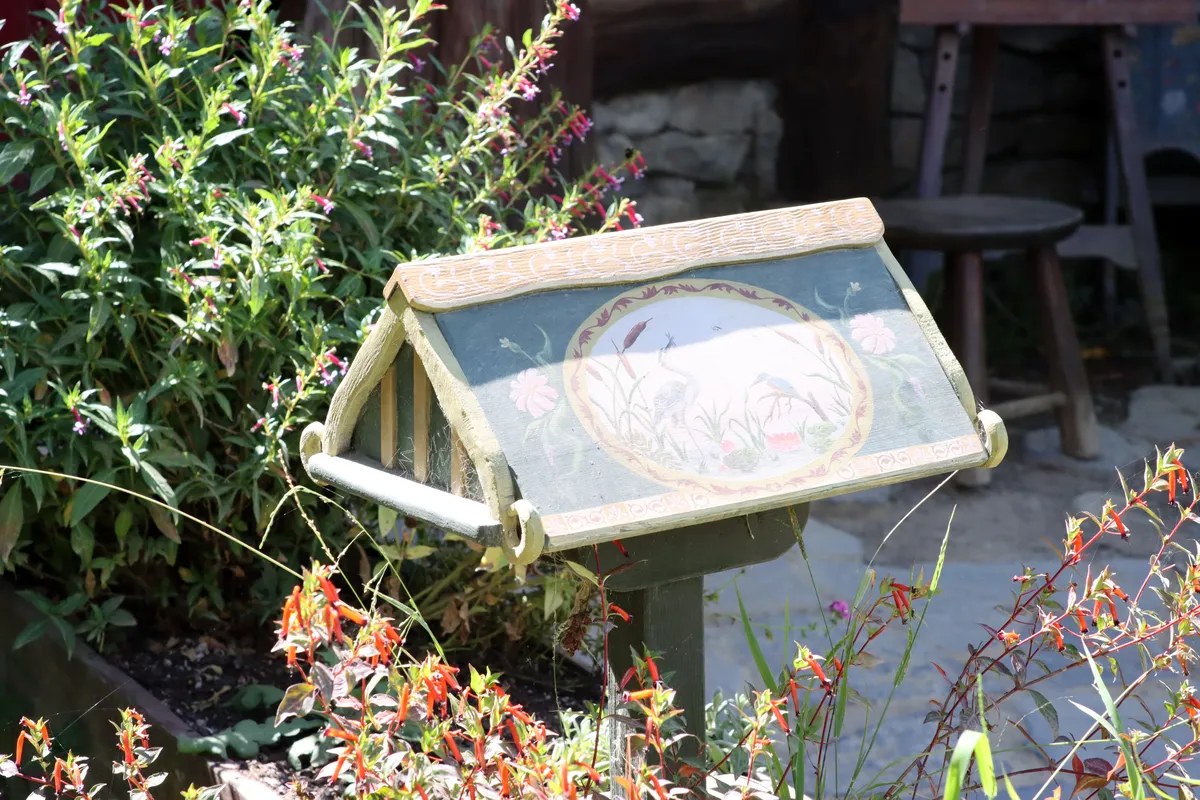
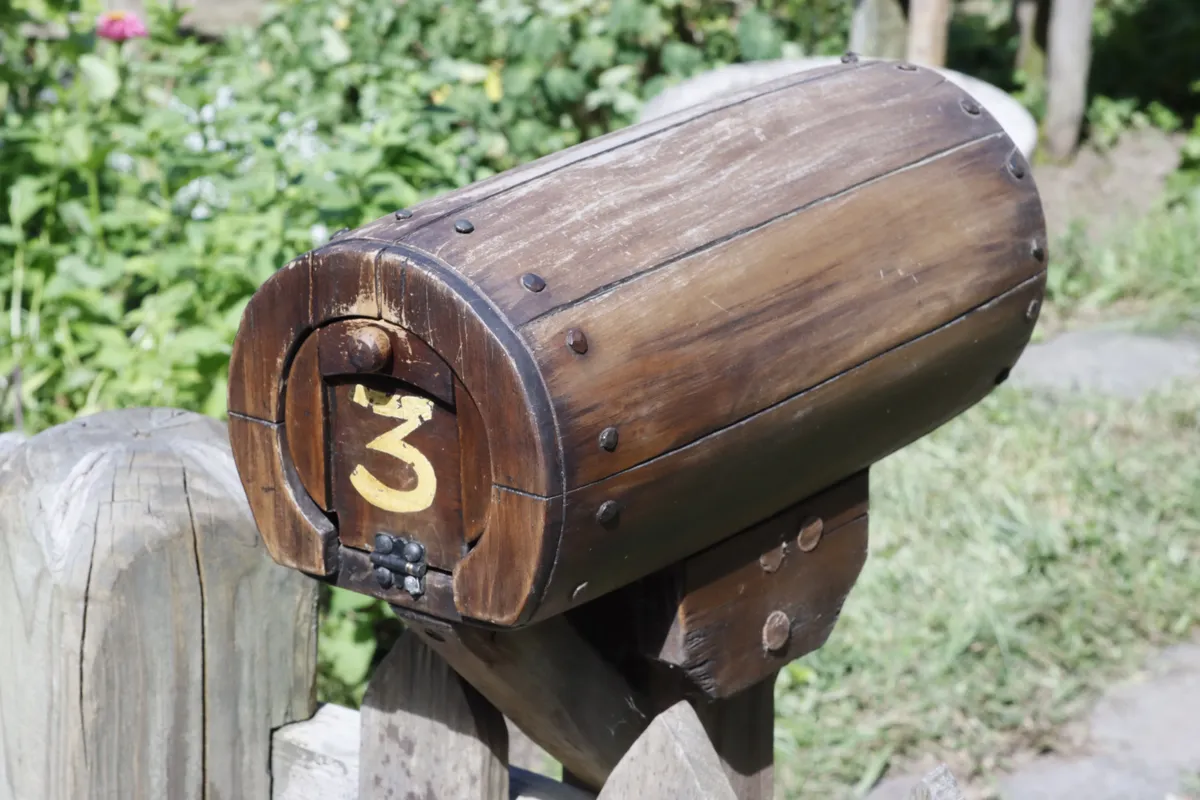
Speaking of letterboxes, I just love the variety of their designs; they just scratch some aesthetic itch of mine.
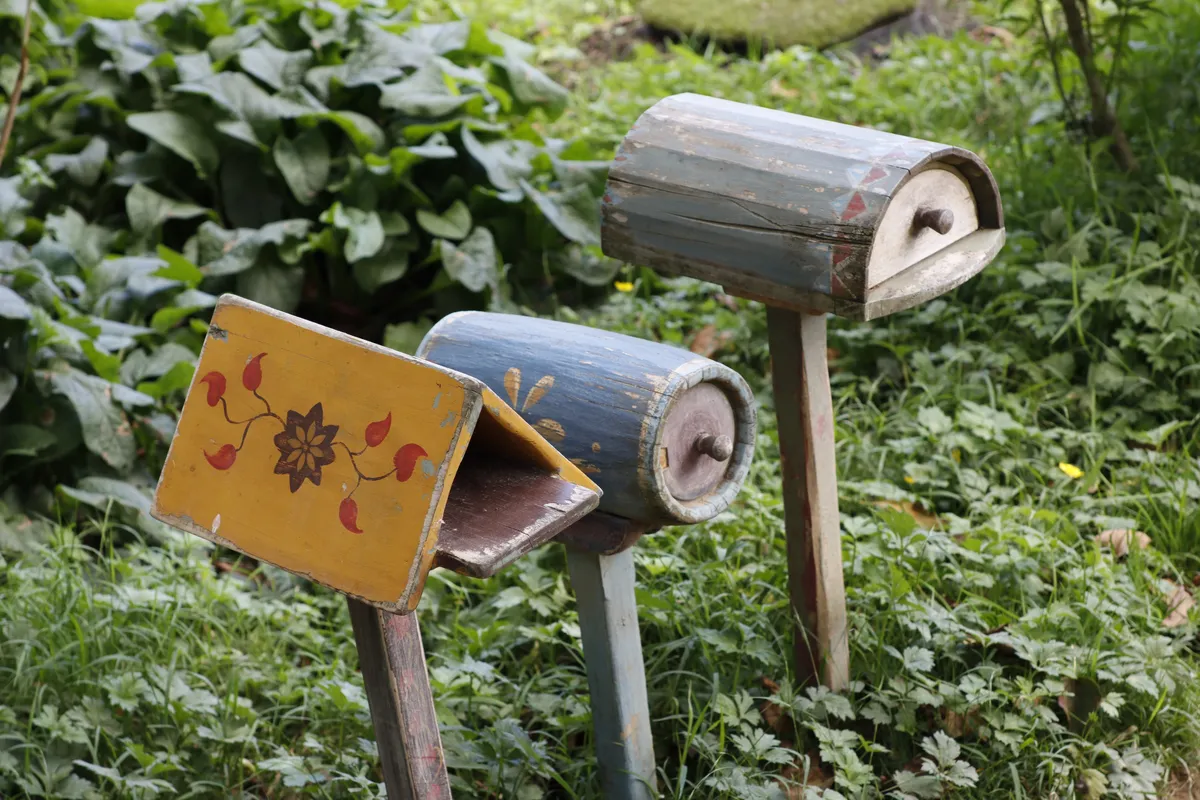
As we weaved our way around the narrow paths, undulating hills, and between hobbit-holes, we found ourselves outside the famous Bag End - home to Biblo and Frodo Baggins. There is just one original detail at Bag End which has remained the same since the start of filming Lord of the Rings: the stone steps leading up to the door. Actors who have walked these very steps include Ian McKellen, Elijah Wood, and Martin Freeman (who Abbie has a tendency to fawn over).
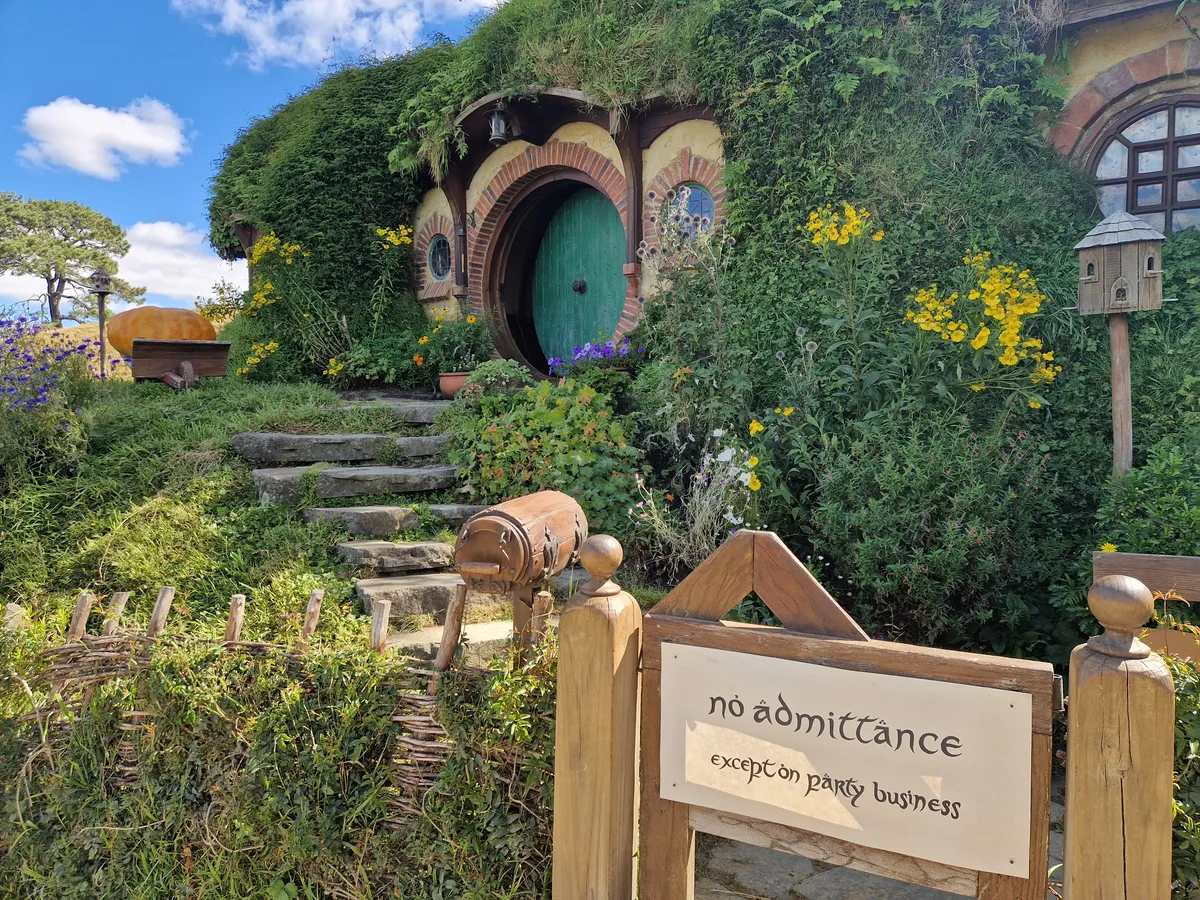
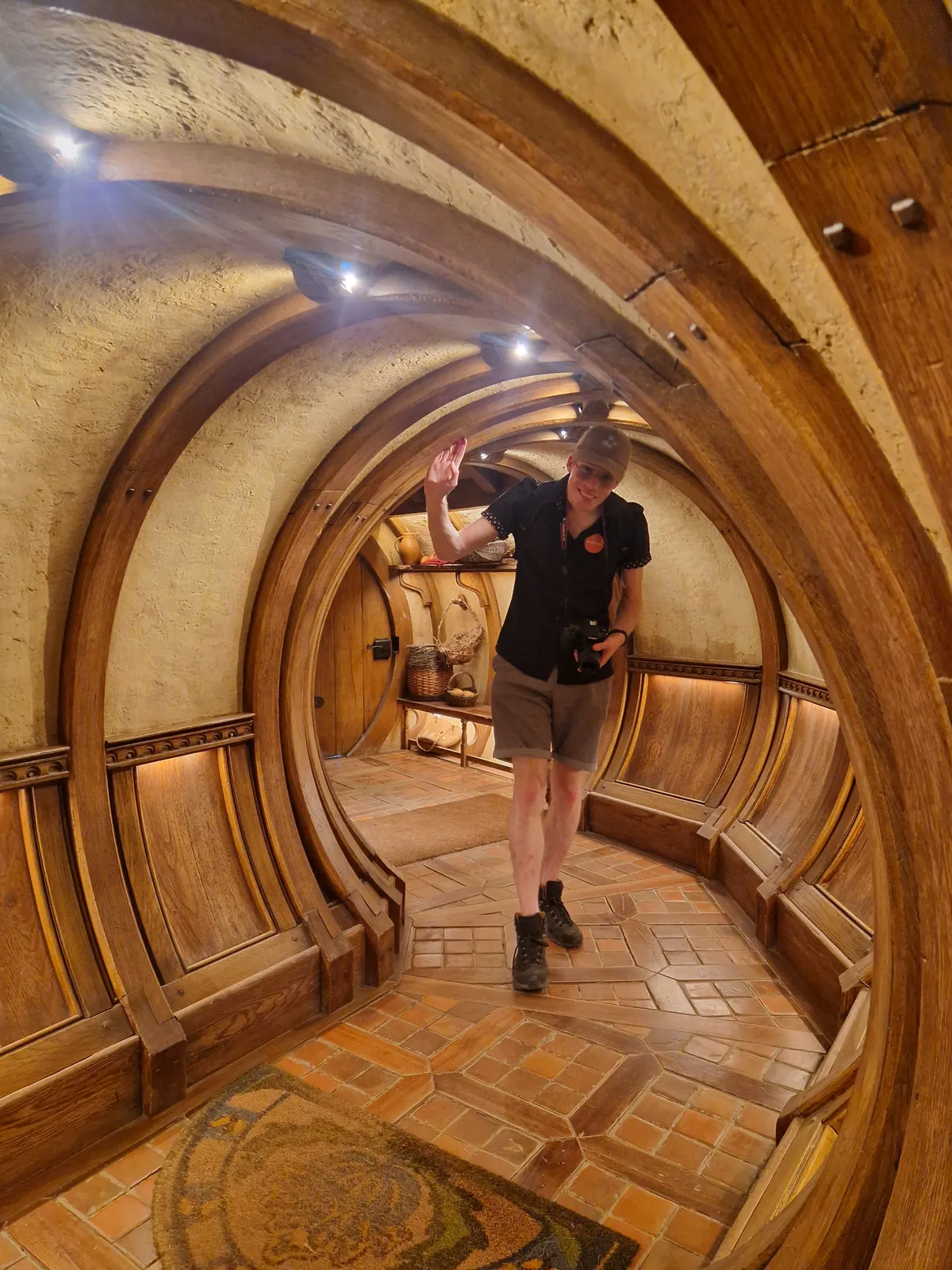
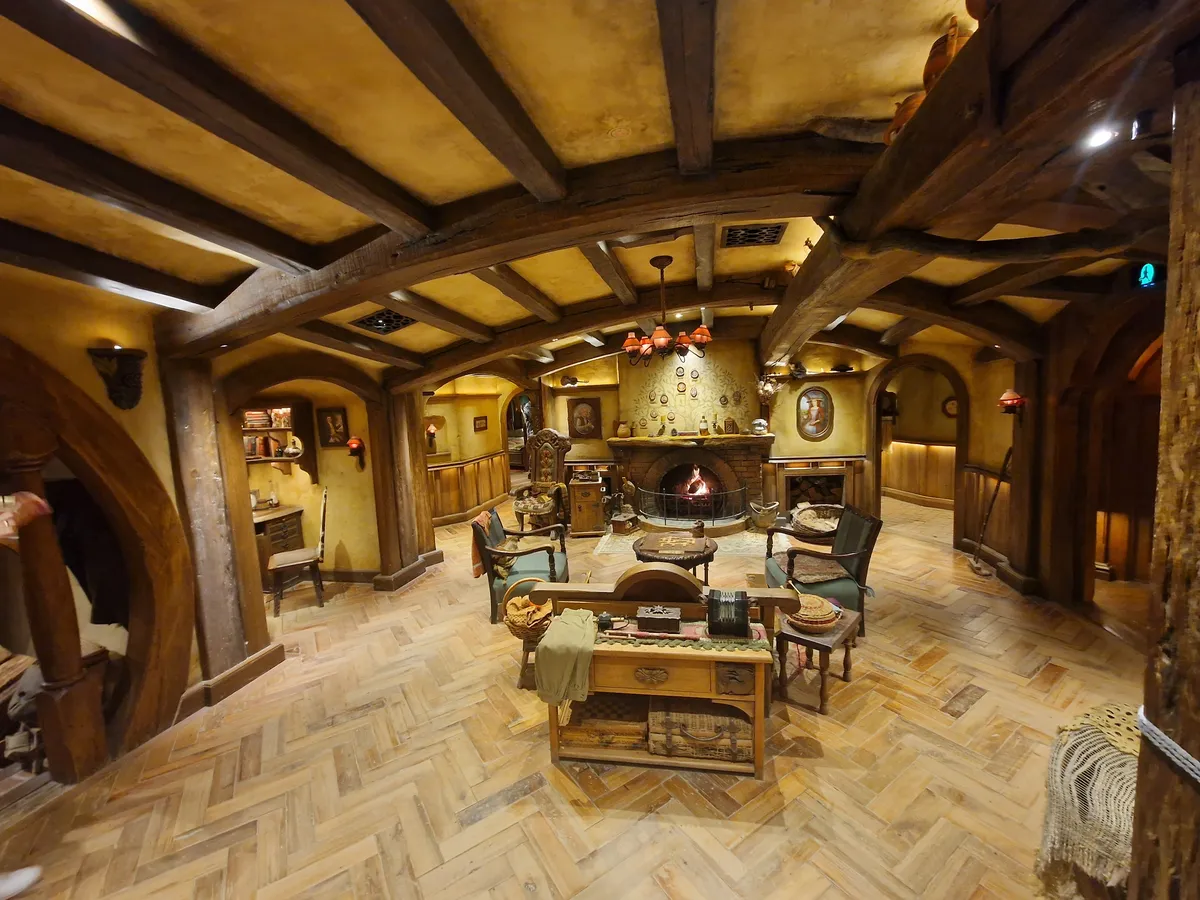
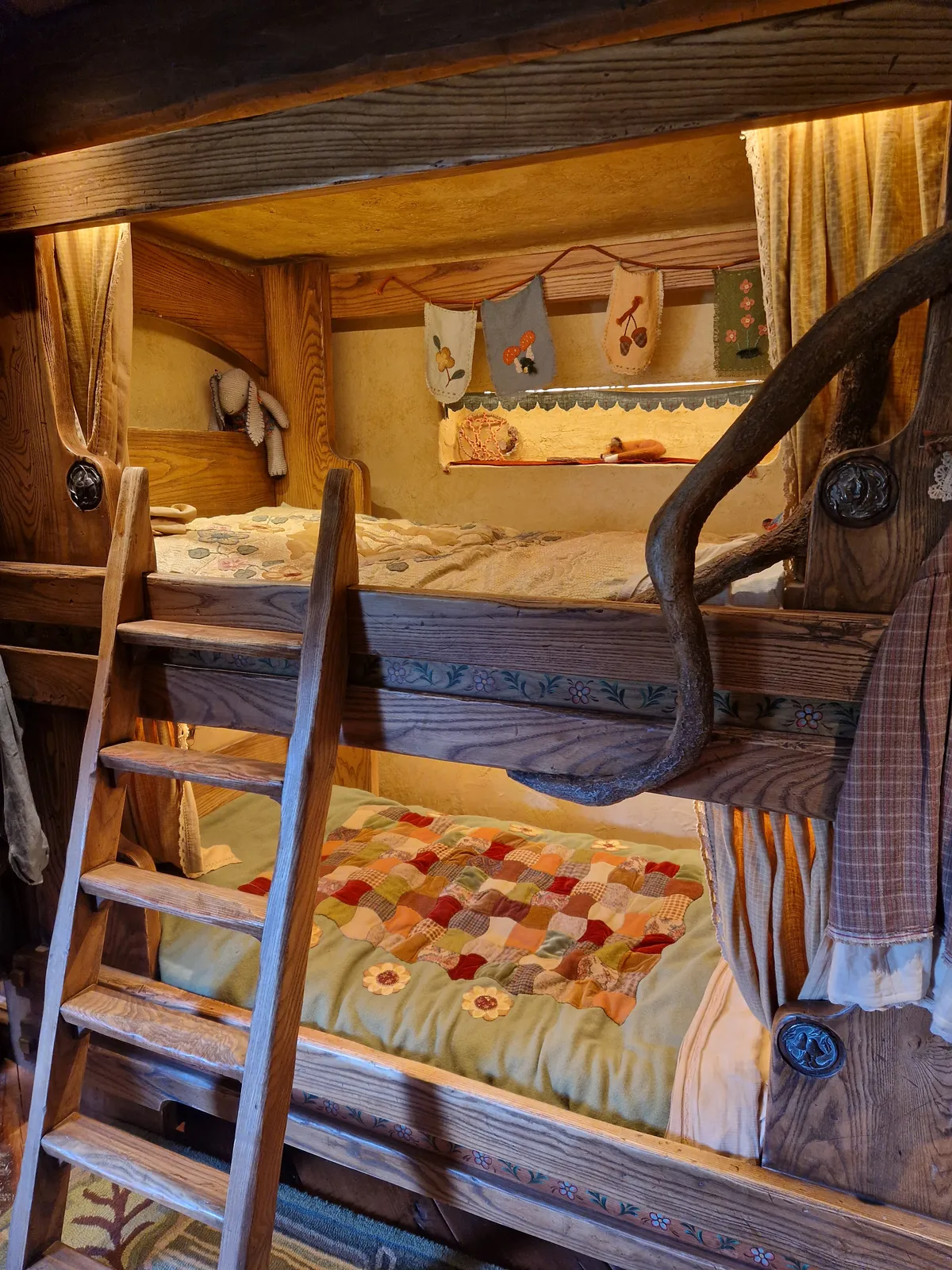
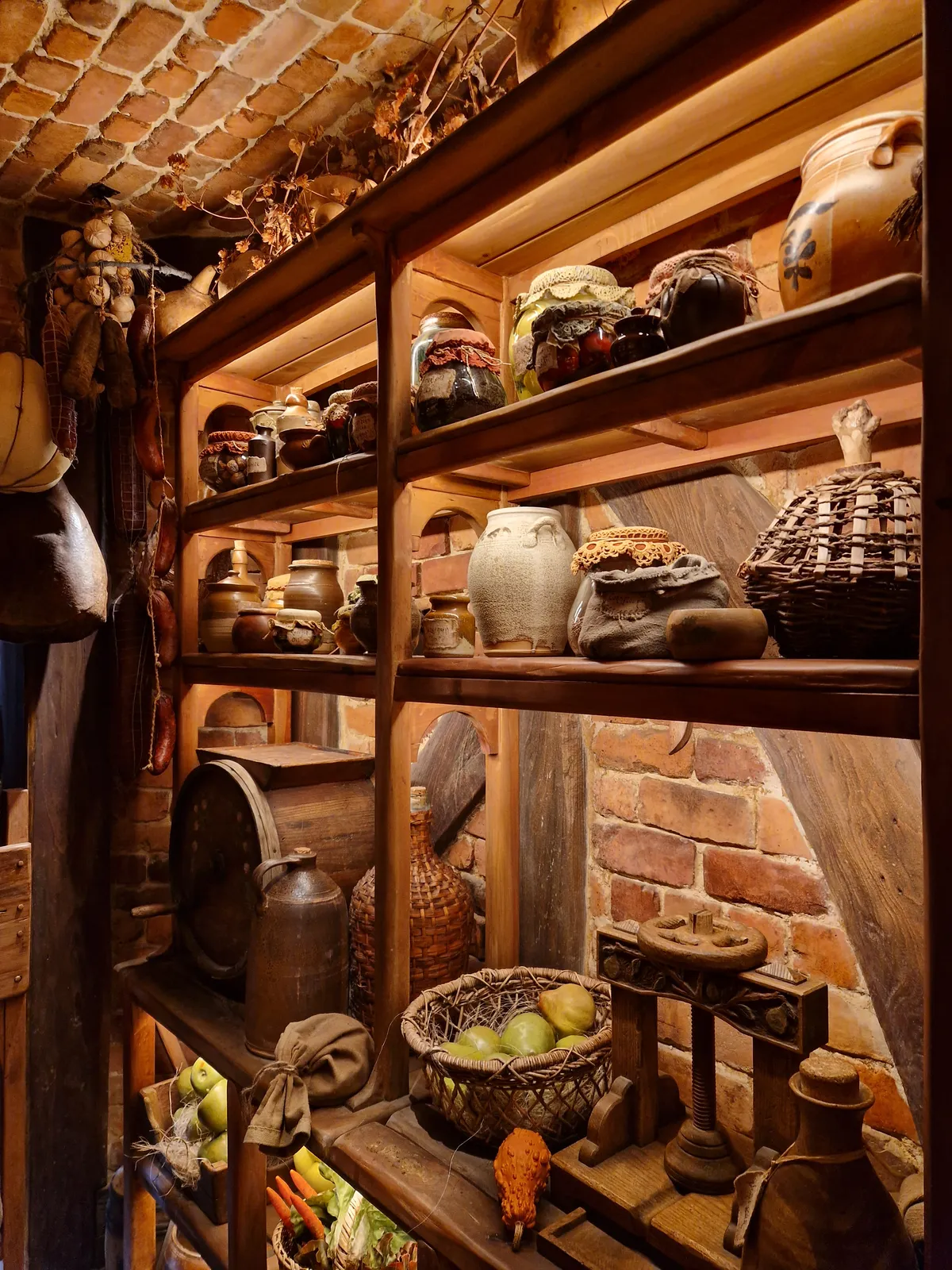
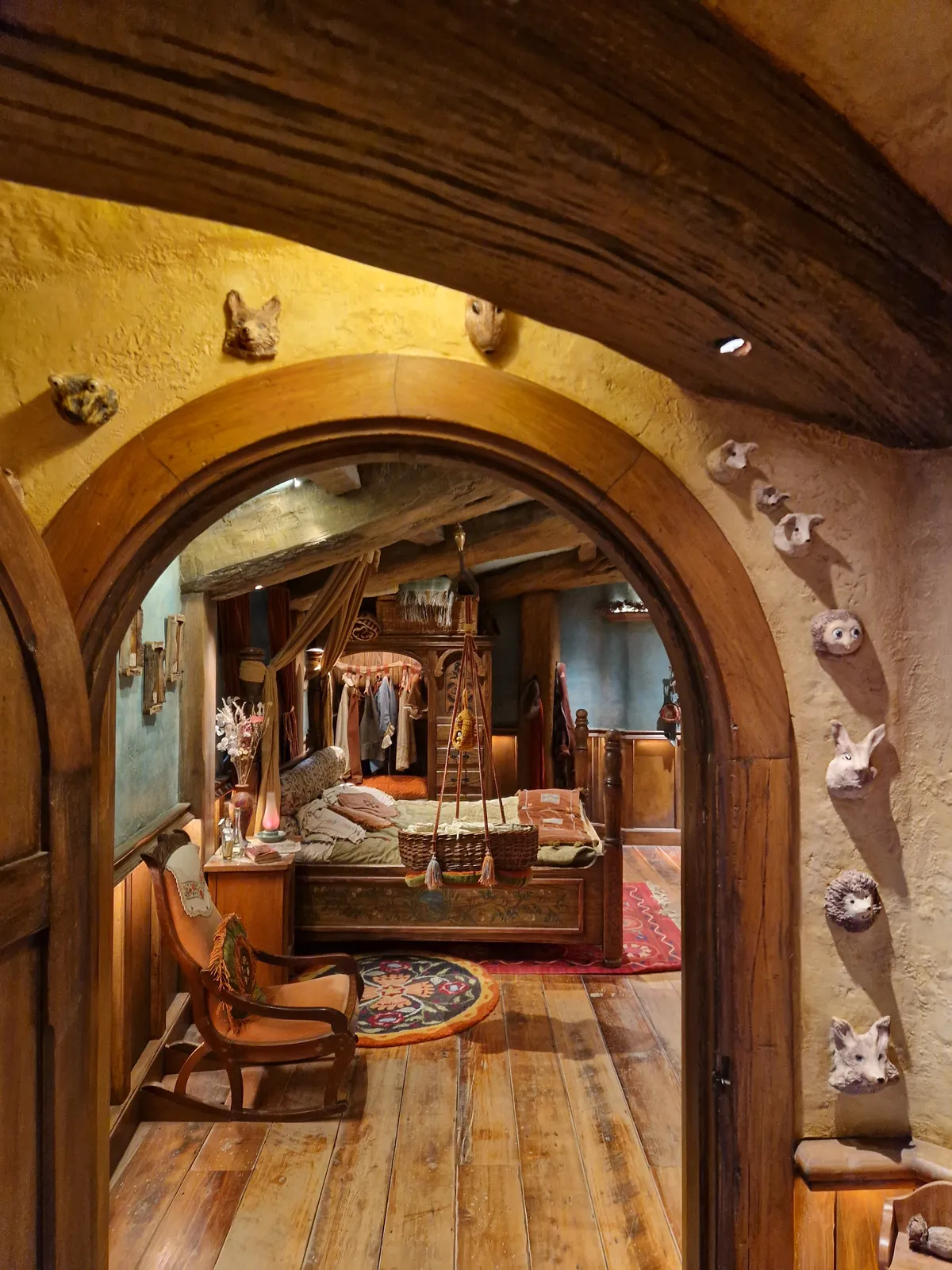
I had actually visited the set once before back in 2022, but this visit had more to offer: a fully decked-out hobbit hole that we could actually go inside and have a full nosey about in! This YT short shows what it looks like to walk about within the humble abode.
The thing that makes this place so special and immersive is the sheer amount of detail and craftsmanship everywhere you look. And I mean everywhere. Every prop and detail tells a story.
This is especially true for those interior holes. If they were available on AirBnB, I wouldn't mind spending a pretty penny to stay the night, just so I could root around and take it all in.
After touring the hobbit holes around the lake, we made our way to the Green Dragon Inn, where we were given a choice of Southfarthing beer or cider.
We then sat down and sipped away, taking in all the view across the lake and reflecting on the myriad and infinitely-artistic details that we had seen.